

Kitchen tools that changed how I cook
8 worth rearranging your drawers for

Hi! If you’re new here, welcome to Dish Lister!
I’m a professional recipe tester with a decade of experience developing and testing recipes for cookbooks and food media. Here you’ll find reliable, thoroughly tested recipes and honest recommendations vetted to a professional standard, so you spend less time second-guessing and more time cooking food you’re genuinely excited to make.
For access to every single tested recipe and curated find, plus a monthly live cooking class series, upgrade to a paid subscription today!
I often get asked what tools and appliances I use most often in my kitchen and are the most indispensable and valuable to me.
I’ve previously shared my list of essential tools for every starter kitchen, but beyond those carefully-chosen basics, I’ve never talked about the tools that simply make my life in the kitchen so much better. “Better” as in easier, more effortless, and vastly improving the quality of my cooking or final results of a dish. These are all tools I rely on heavily and, in my opinion, are money very well spent.
As fall approaches here (sorry to even have to say that!) and many of us return to the kitchen with more regularity, now seems as good a time as any to share my list of game-changing tools.
To qualify, each one had to meet several (if not all) of the following criteria:
Frequently used (something I reach for often)
Saves time
Reduces effort
Improves food quality (better results)
Versatile
Durable
Storage-efficient (I don’t live in NYC anymore, but I still value tools and appliances that take up less space and are easy to store.)
Elevates my home cooking
Good value for money (the benefit outweighs the cost)
Now, for the list…
Kitchen tools that changed how I cook
These eight kitchen tools have had the biggest positive impact on my time in the kitchen and have made me a better cook. To reiterate, this isn’t a list of ktichen basics (although a couple of these would would make that list too). Rather, these are the tools that have most meaningfully elevated my cooking—and hopefully will do the same for you!
1. Quality (and sharp!) chef’s knife
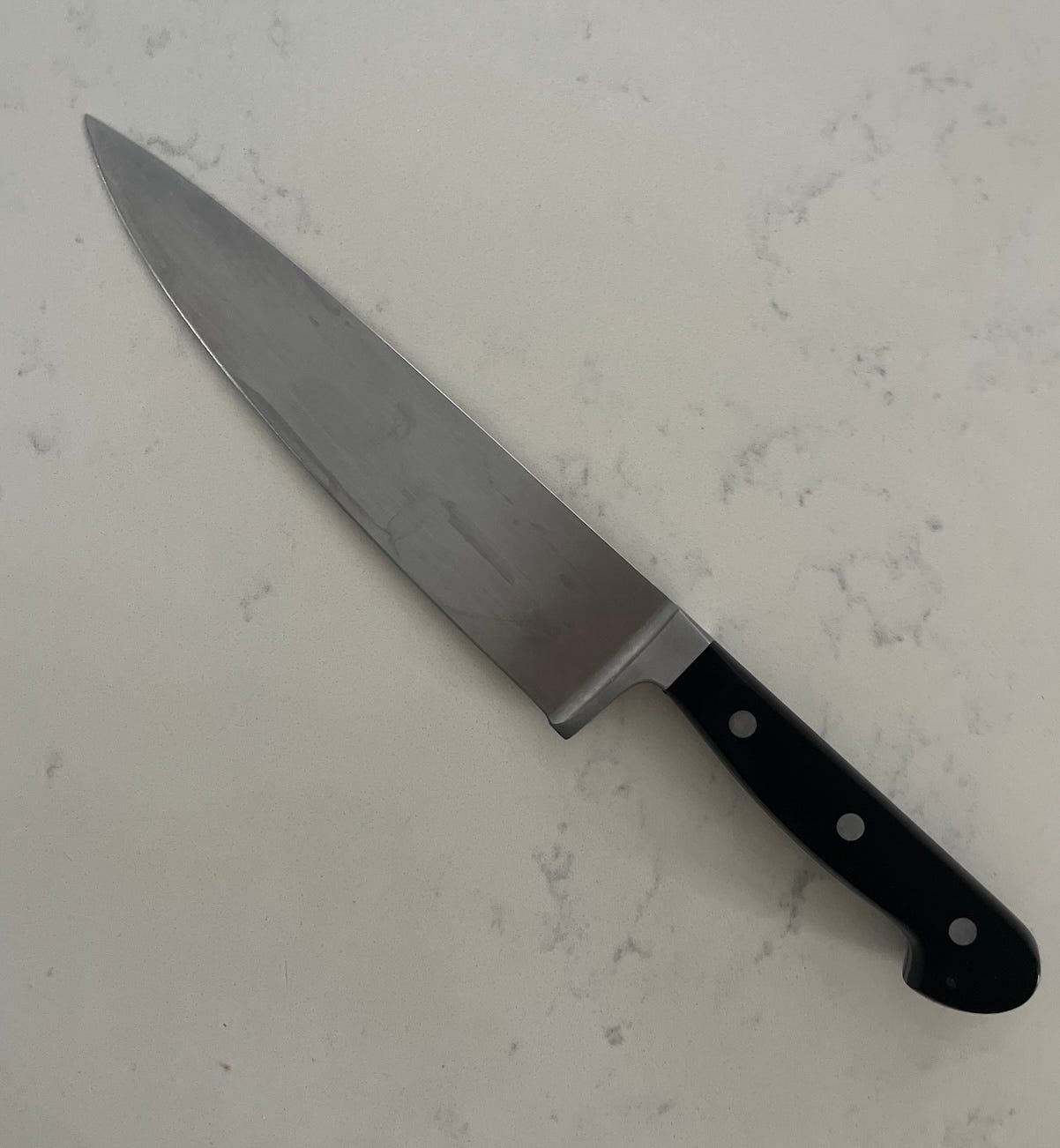
Few things are more frustrating than trying to cut into something with a dull, low-quality knife. Chopping or slicing with a good knife should feel relatively effortless—not like an arm workout! And honestly, some of the worst knives feel like they’re one bad slip away from being a safety hazard. Yikes!
If you’re going to invest in just one high-quality knife, make it a chef’s knife. It’s the knife you’ll use most often, handling the lion’s share of your everyday slicing, chopping, and dicing. (Paring and serrated knives are also worthwhile additions to a well-rounded knife collection, but I’d argue you can skimp a bit on quality since you’ll use them less often and for more specialized tasks.)
Criteria it meets: Frequently used; saves time; reduces effort; improves food quality; durable; good value for the money.
What I use it for: Chopping, slicing, and dicing.
Good option: This 8-inch model is very similar to the one I use (also from Henckels).
2. Handheld mandoline
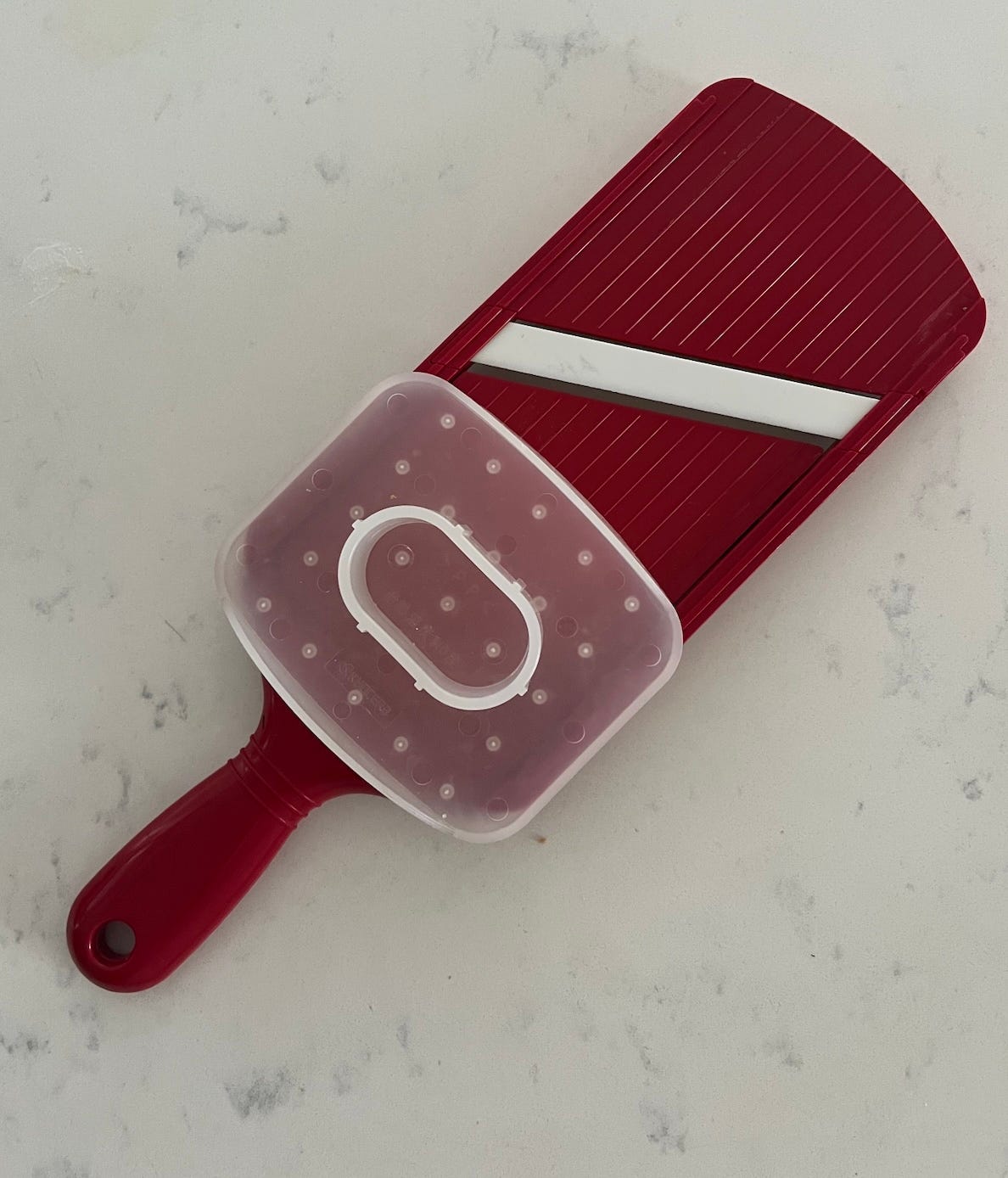
I received my first mandoline as a wedding gift. It looked like a cross between a Pilates reformer and guillotine (in other words, an accident waiting to happen!). It wasn’t terribly space-efficient either. The mere sight of it terrified me, and I used it sparingly for the sake of my fingertips. Then I discovered handheld mandolines, which are far less intimidating and much easier to store. Now, I reach for mine all the time—most recently, to uniformly and efficiently thinly slice three pounds of zucchini!
Criteria it meets: Frequently used; saves time; reduces effort; improves food quality; storage-efficient; elevates my home cooking.
What I use it for: When I need to slice things like onions, cucumbers, beets, and potatoes very, very thinly and want a fair degree of uniformity or more aesthetically-pleasing results.
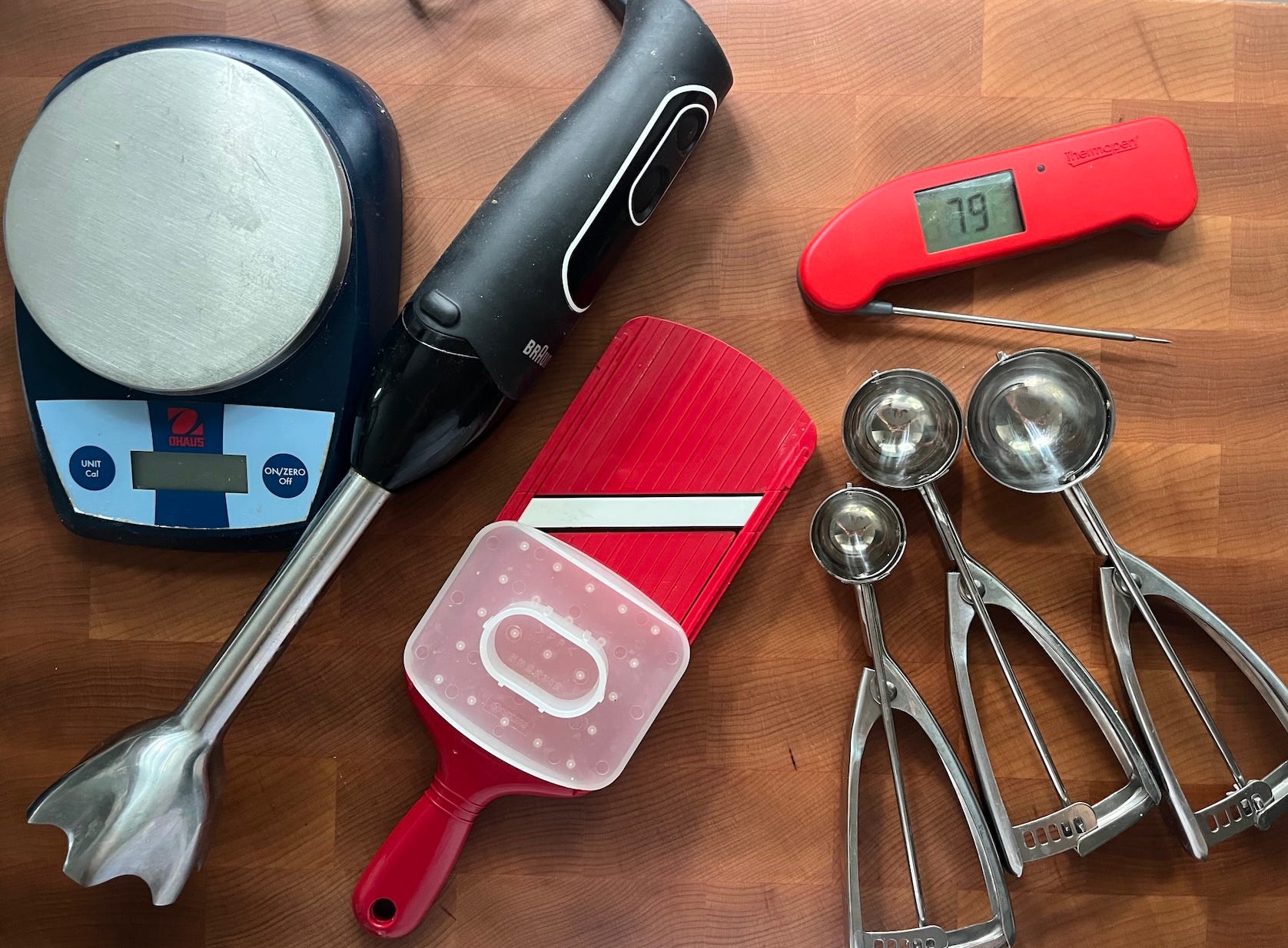
Good options: This is the basic one I have (which is very reasonably priced and has served me well), and this option also has very good reviews (it costs slightly more, but unlike mine, has an adjustable thickness).
3. Instant-read thermometer
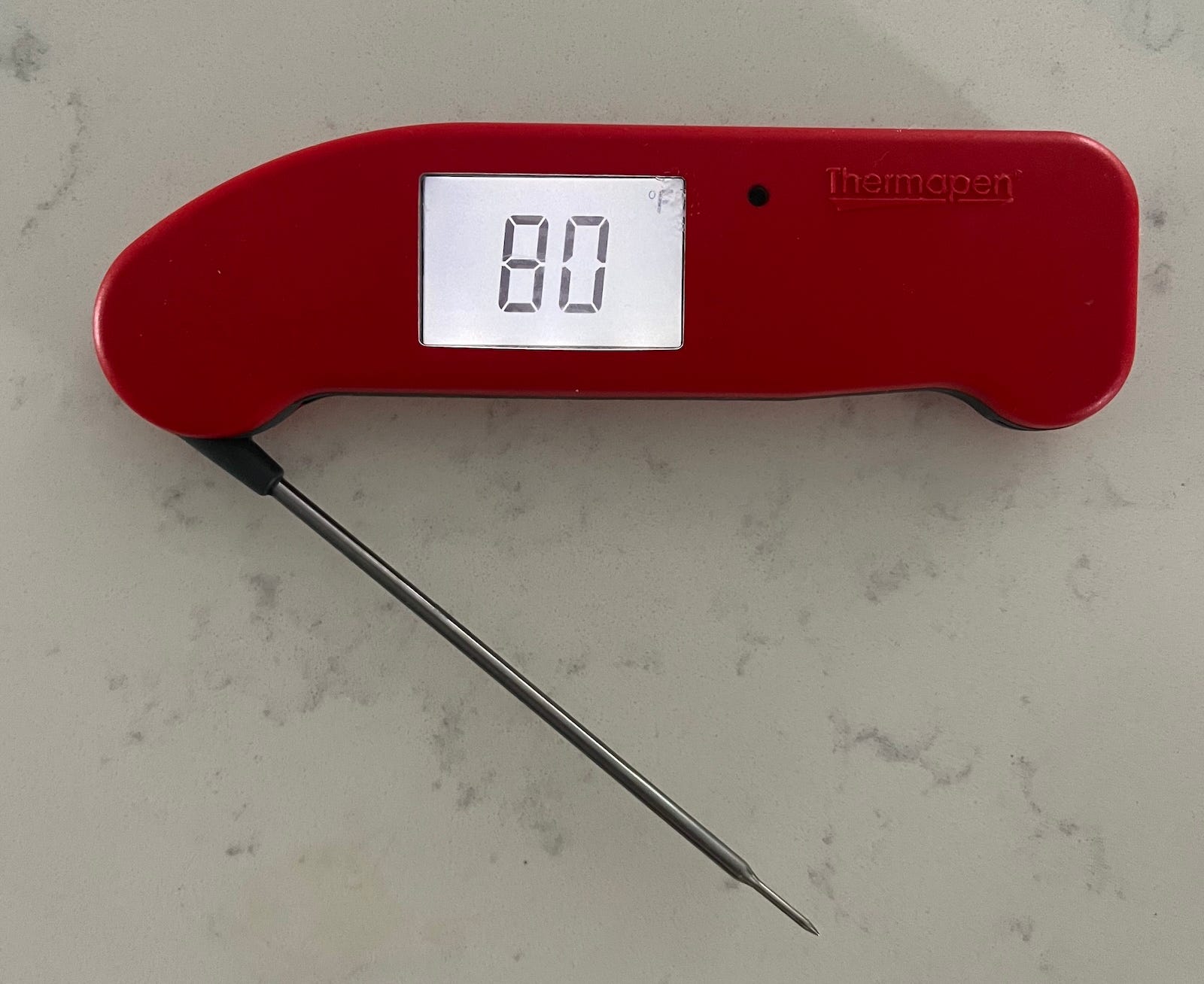
Everyone should own an instant-read thermometer. It’s one of the most useful kitchen tools because it tells you exactly when food is done, removing guesswork and preventing undercooking or overcooking. I’ve owned many different thermometers over the years and can attest that they vary greatly in quality and accuracy. Thankfully, I found one a few years ago that was remarkably quick, accurate, and durable, and I haven’t looked back since.
Criteria it meets: Frequently used; saves time; reduces effort; improves my food quality; durable; storage-efficient; good value for the money.
What I use it for: I use my instant-read thermometer primarily to check the temperature of meat and fish, but I've also found it useful for testing the doneness of breads and cakes. I even use it to check the temperature of the water before adding yeast when I'm making bread.
Good options: The classic Thermapen from ThermoWorks is considered the gold standard by many culinary enthusiasts for its lightning-fast reads and remarkable accuracy. I love mine! And here’s a smaller, slightly more affordable option.
4. Digital kitchen scale
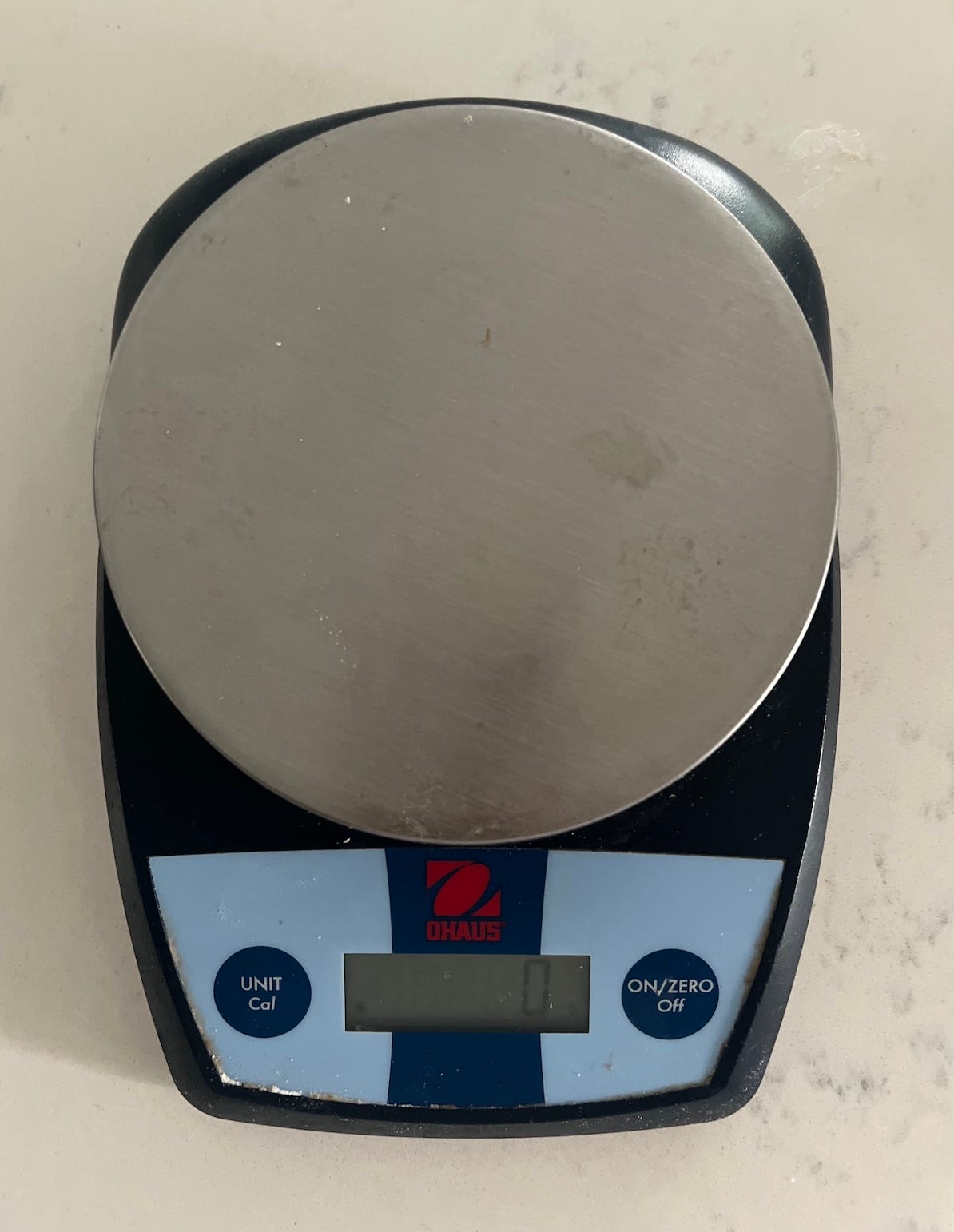
A digital kitchen scale is a must for anyone who bakes regularly or, frankly, even occasionally. It's more precise than measuring by volume, resulting in more consistent (and sometimes better) results. I also find there's less to clean since you can weigh multiple ingredients directly into the same bowl. Beyond baking, I use my digital scale to weigh produce and meat whenever I need to be more precise.
I’d highly recommend investing in a scale that’s able to measure in small increments (typically 1 gram or 0.1 ounce). It should also ideally have a tare function that allows you to zero out the weight of a bowl or container and measure multiple ingredients in the same bowl. It’s also great to have one with a decent weight capacity (mine goes up to 11 lbs.) and lets you switch between units (grams, ounces, pounds, milliliters, and fluid ounces).
Criteria it meets: Frequently used; saves time; reduces effort; improves food quality; durable; storage-efficient; good value for the money.
What I use it for: Baking with any recipe that offers measurements in grams, for weighing or evenly portioning produce, meat, cheese, and bread doughs.
Good option: I still use the kitchen scale I got in culinary school (it’s held up for over a decade!), but if mine ever breaks, I’d definitely replace it with this highly-rated model with a 17-pound capacity and excellent accuracy.
5. Food processor
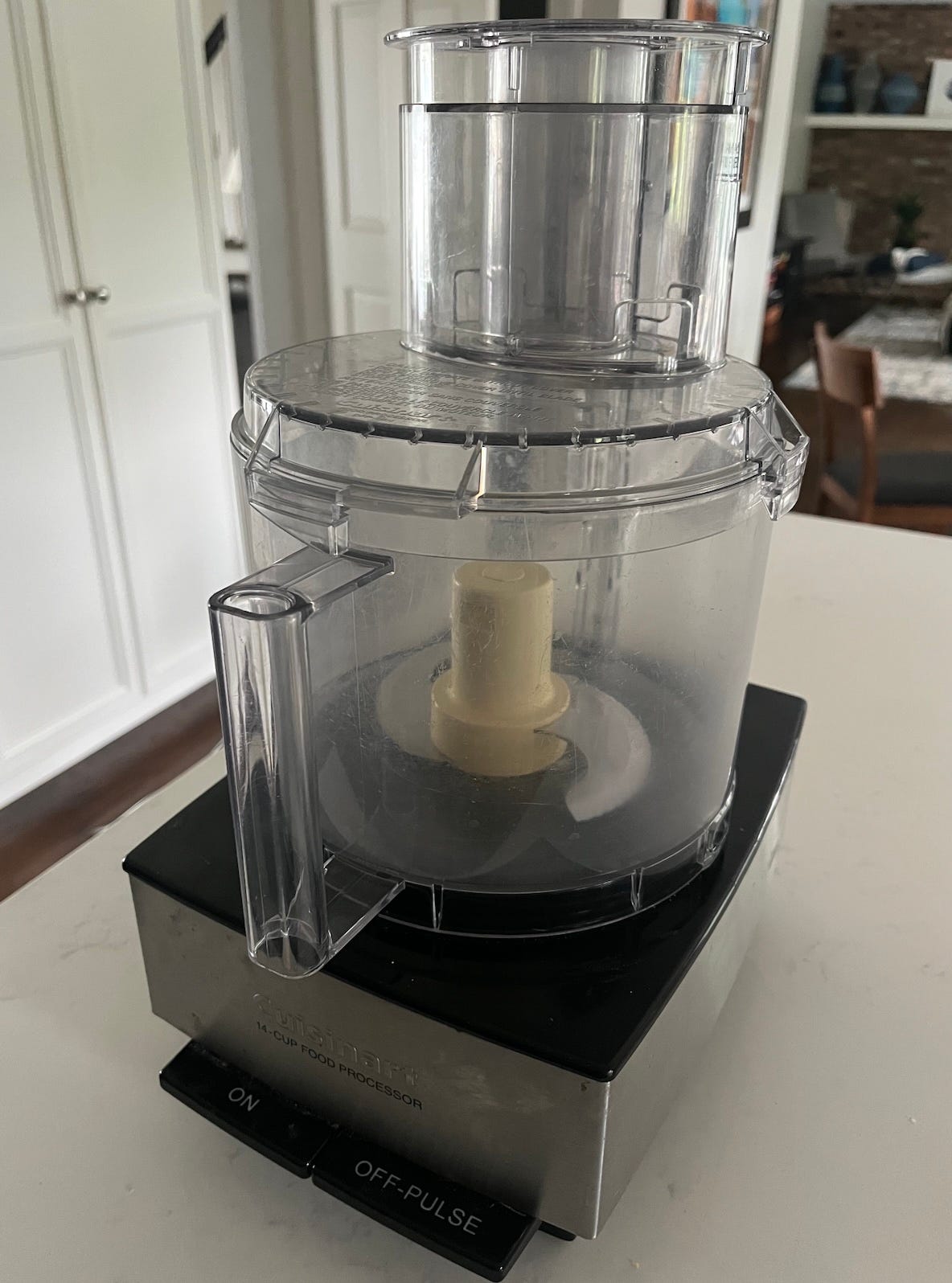
It’s technically an appliance, not a tool, but I had to include my food processor because it does a lot of heavy lifting for me in the kitchen.
Criteria it meets: Frequently used; saves time; reduces effort; durable; versatile; good value for the money.
What I use it for: What don't I use my food processor for? 😄 I use it to make sauces, salsas, and hummus. It's great for pie dough and other doughs where you need to cut butter into flour, like biscuits or scones. It’s perfect for finely chopping nuts or other ingredients, and grinding graham crackers or bread into crumbs. I also use the grating blade when I need to shred larger amounts of cheese or vegetables, such as cabbage or carrots for coleslaw. It’s such a versatile appliance and one that has paid for itself many times over.
Good options: This is the 14-cup model I’ve had for over a decade. There’s also a considerably more expensive 16-cup size from Breville for bigger batch cooking.
6. Immersion blender set


An immersion blender is an excellent tool for puréeing foods right in a pot or other container, so you don't have to transfer the mixture to a countertop blender and dirty another appliance. While a standalone immersion blender is great in its own right, I recommend getting a set that includes attachments like a mini food processor, potato masher, and whisk. You'll get far more use out of it (and a much better bang for your buck) than you would from a single-purpose appliance.
Criteria it meets: Frequently used; reduces effort; saves time; improves food quality; durable; versatile; great value for the money.
What I use it for: Puréeing soups, emulsifying salad dressings, making homemade mayonnaise, chopping smaller quantities of herbs and other foods, grinding spices, grating Parmesan, mashing potatoes, and whipping cream.
Good options: I looove my versatile Braun blender set with attachments, and it’s priced well. But this similar set from another trusted brand won’t steer you wrong either.
7. Ice cream scoop set
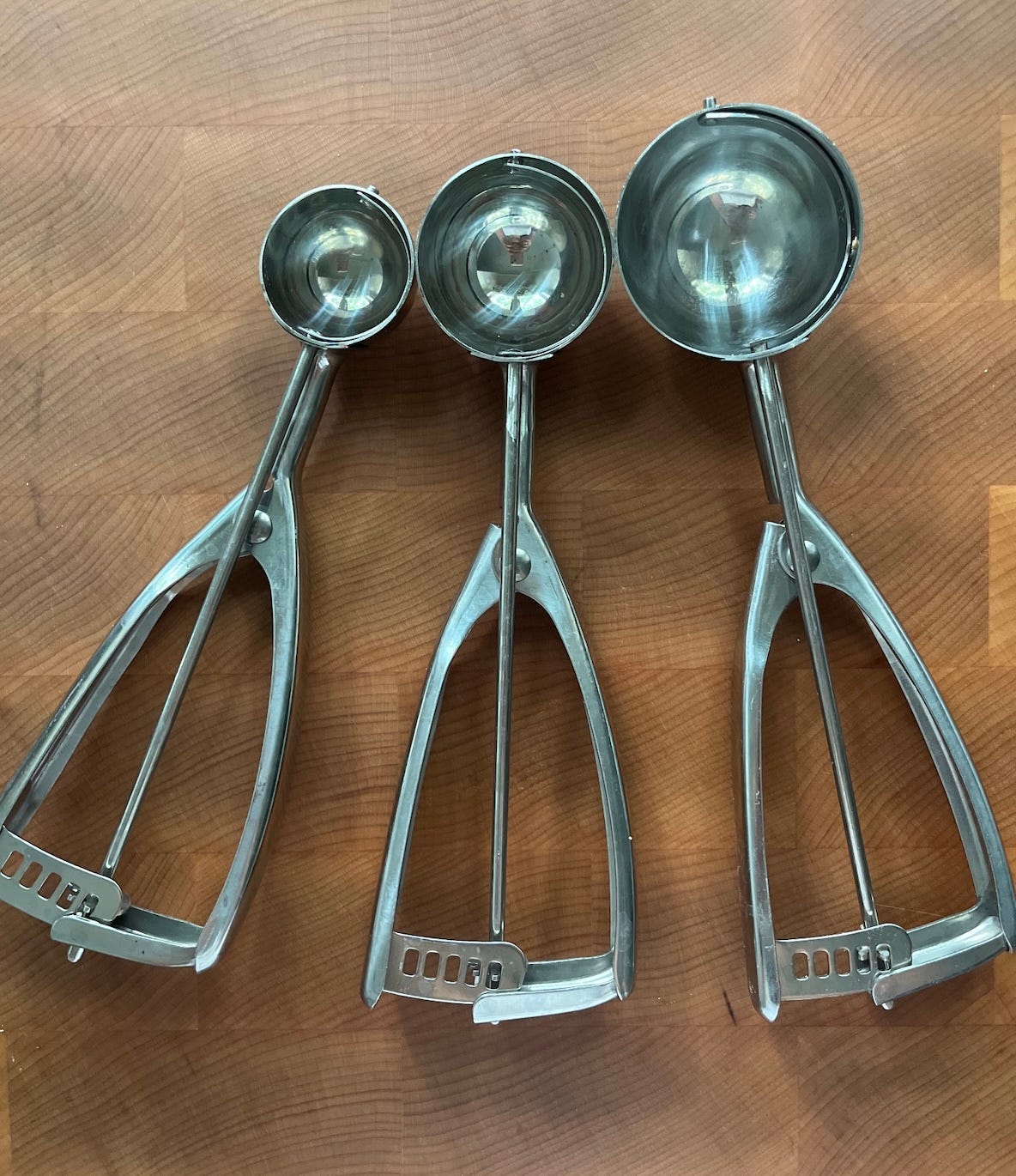
If you dream of making beautiful, uniformly shaped meatballs, muffins, or cookies, then this ice cream scoop set might be just the thing for you!
Confession: I rarely use my set of scoops for ice cream (gasp!), but having a handy set of spring-loaded ice cream scoops of varying sizes has been game-changing for performing so many other invaluable kitchen tasks—from portioning cookies or muffins to making pancakes. And I have used them to scoop ice cream…usually when I desire different, often smaller-sized, portions.
In case you’re wondering, I usually reach for this incredible tool when I’m scooping ice cream. If it looks familiar, it may be because I’ve mentioned it before and am obsessed with its ability to consistently and effortlessly produce and release beautiful scoops, thanks to a unique heat conductive handle.
But, I digress…back to why I love my scoop set!
Criteria it meets: Reduces effort; versatile; elevates my home cooking, good value for the money.
What I use it for: Portioning meatballs, cookies, muffins, and energy balls; making pancakes; scooping ice cream (less often; for smaller-sized scoops).
Good option: This is the 3-scoop set I have. It’s a great price and comes in a variety of fun colors.
8. Baking steel
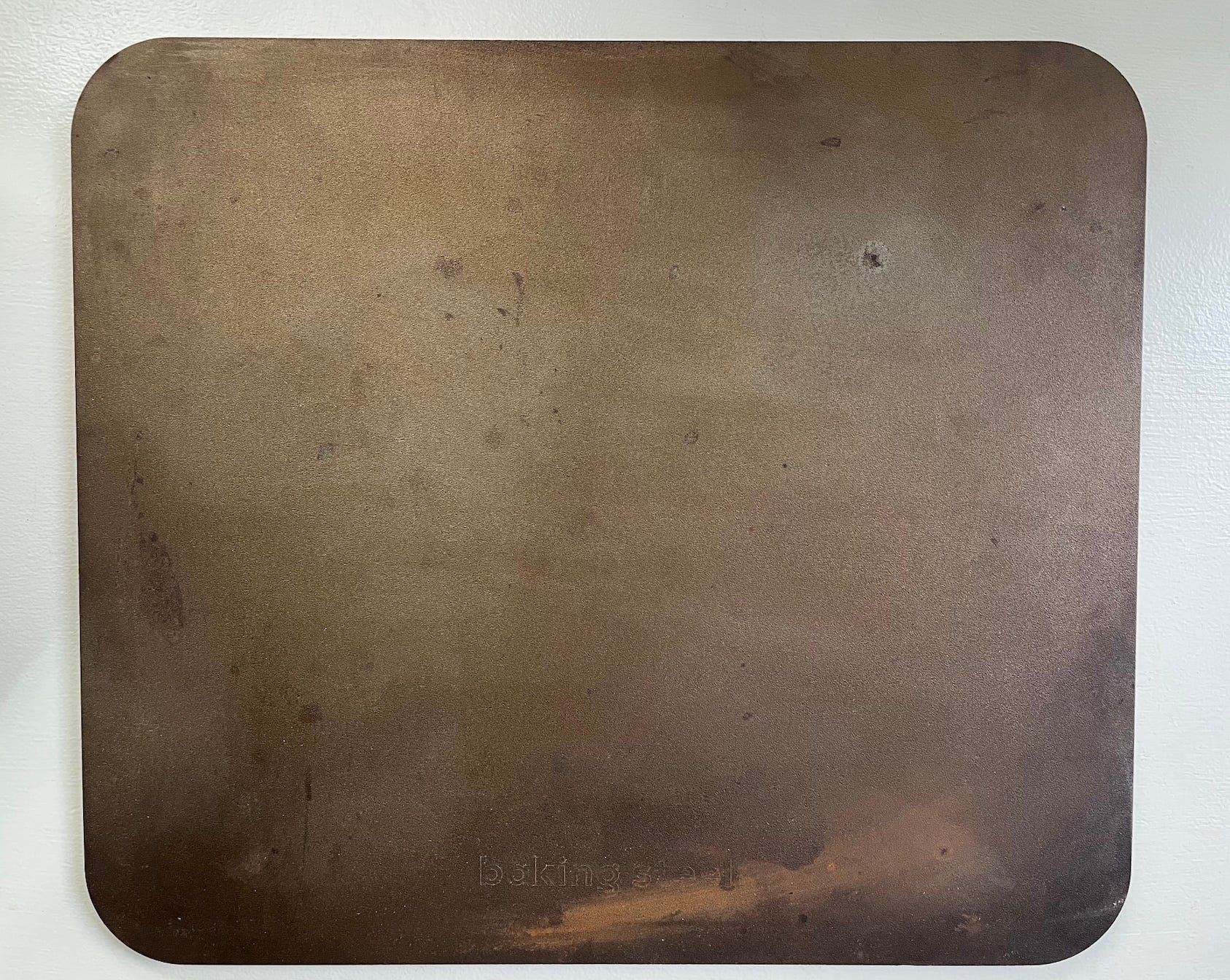
While a baking steel may seem like a nice-to-have and it’s the only one on my list that I don’t reach for regularly, it’s a must if you make homemade pizza (or aspire to). Because household ovens can’t reach the blazing temperatures of commercial pizza ovens, which often exceed 800°F, it’s much harder to achieve that crisp, restaurant-quality crust at home. A baking steel helps bridge that gap. A pizza stone can produce great results (I’ve got one too), but I’ve gotten the best results with my baking steel. As a bonus, it also produces legendary English muffins and pita bread (along with many other types of bread). And I highly recommend using it for that purpose as well.
Criteria it meets: Improves food quality; durable; storage-efficient, elevates my home cooking; good value for the money.
What I use it for: Making homemade pizza, English muffins, and pita bread. I’m excited to use it to try a few new types of bread this fall.
Good option: Here’s the baking steel I own. It’s often recommended by other cooking professionals, which only further reinforces my opinion that it’s a great choice and worthy investment.
And a few more honorables mentions...
Stand mixer (a splurge, but mine’s lasted over 20 years!); multi=purpose bench scraper; leave-in probe thermometer (for the juiciest, most perfectly cooked whole chickens and turkeys every time); and large Dutch oven (another splurge, but serving as a large pot, bread baking vessel, and deep fryer, it’s the GOAT).
What are some of the kitchen tools that have enhanced your life? Share your favorites in the comments below!
Join Our Next CookStack Collective Class on Friday, August 21!

I cannot wait for the next CookStack Collective class on Friday, August 21 at 3pm EDT/ 12pm PDT—it’s going to be a great one!
Betty Williams will be leading a kimchi workshop and making her Cabbage Kimchi and Quick Cucumber Kimchi.
I’ve made Betty’s cabbage kimchi before and promise you it’s delicious and way better than anything you’ll buy from a grocery store. I was also shocked by how easy it is to make!


The CookStack Collective cooking classes are offered exclusively to my paid subscribers, but it’s not too late to join in on the fun! If you upgrade to a paid subscription, you’ll have access to every single CookStack Collective class (and recordings), along with exclusive, thoroughly-tested recipes I’ve developed and thoughtfully curated menus.
So many fun classes on the upcoming schedule! I will be hosting my first class in November and making one of my cozy fall favorites: gluten-free Cabbage-Wrapped Chicken Parm Meatballs.
I’d be so honored and excited to have you join us in August and beyond!
Have a delicious week!
Kerry
P.S. A few of the links in this post are affiliate links, which means I may earn a small commission if you make a purchase (at no extra cost to you). Not a bad deal, right? 😊
A baking steel is new to me! I loved this post!
What a great list. We share a lot of similar opinions, but there are some that I can't justify right now in my NYC apartment haha. That's a cool baking steel! Do you keep your baking steel in the oven all of the time or take it out when you're not using it? Also, do you use it on the stovetop?