

Essential starter kitchen tools every new home cook needs
The bare-minimum toolkit needed to build a functional kitchen from scratch

I’ve been slowly easing into fall—with one kid off to college, the other back in high school—and I’m settling into some familiar routines again after a productive summer.
I’ve also been doing some exciting R&D for this newsletter (it’s been a minute!) and have a coffee shop–worthy muffin recipe coming soon as a special treat for my paid subscribers. Can’t wait to share!
Speaking of cooking, when my oldest left for college, I didn’t expect our phone calls to turn into impromptu cooking consultations—but they have (and I secretly love it). The other day, he called to ask what tools he’d need to make his favorite peanut butter noodles in his dorm kitchen. That conversation got me thinking: what are the essential, bare-minimum tools every home cook should have to build a functional starter kitchen?
To make my list, I went through my kitchen drawers and cabinets and set a few simple criteria. The tools should serve more than one purpose (no single-use gadgets like a garlic press). They should be ones I reach for frequently—often daily. They should be compact and easy to store, making them practical for dorms or small apartments. And finally, they should be budget-friendly: no need to splurge, but durable enough to withstand regular use. There are a couple of exceptions where it’s worth spending a little more, which I’ll cover.
11 Essential Starter Kitchen Tools
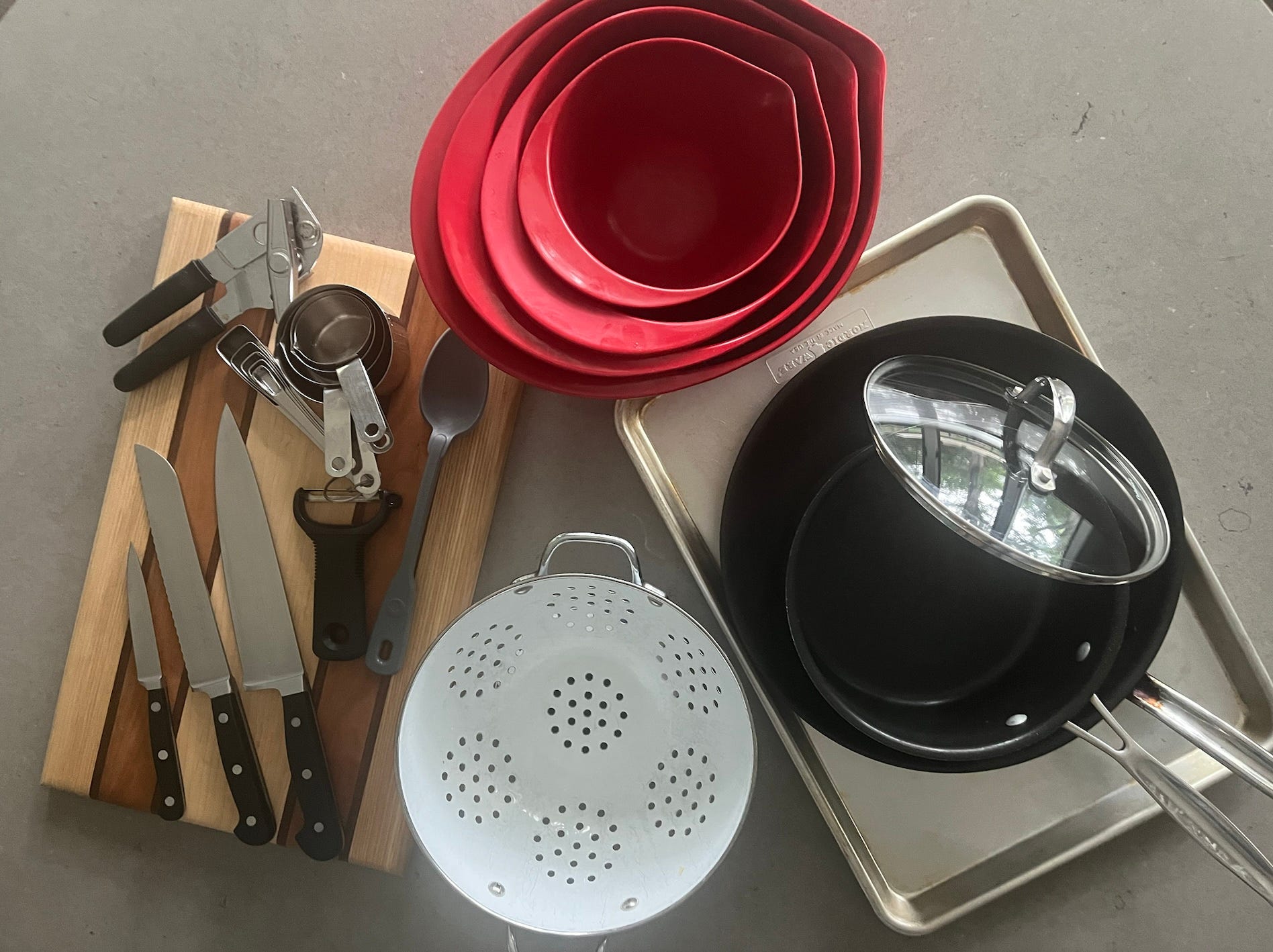
These are the 11 bare-minimum starter kitchen tools I recommend. I really wanted to keep it to a nice round 10 items, but in good conscience, I couldn’t narrow it down further. (Side note: these are the same tools you’d want on hand in a vacation rental to cook meals with ease.)
1. Saucepan
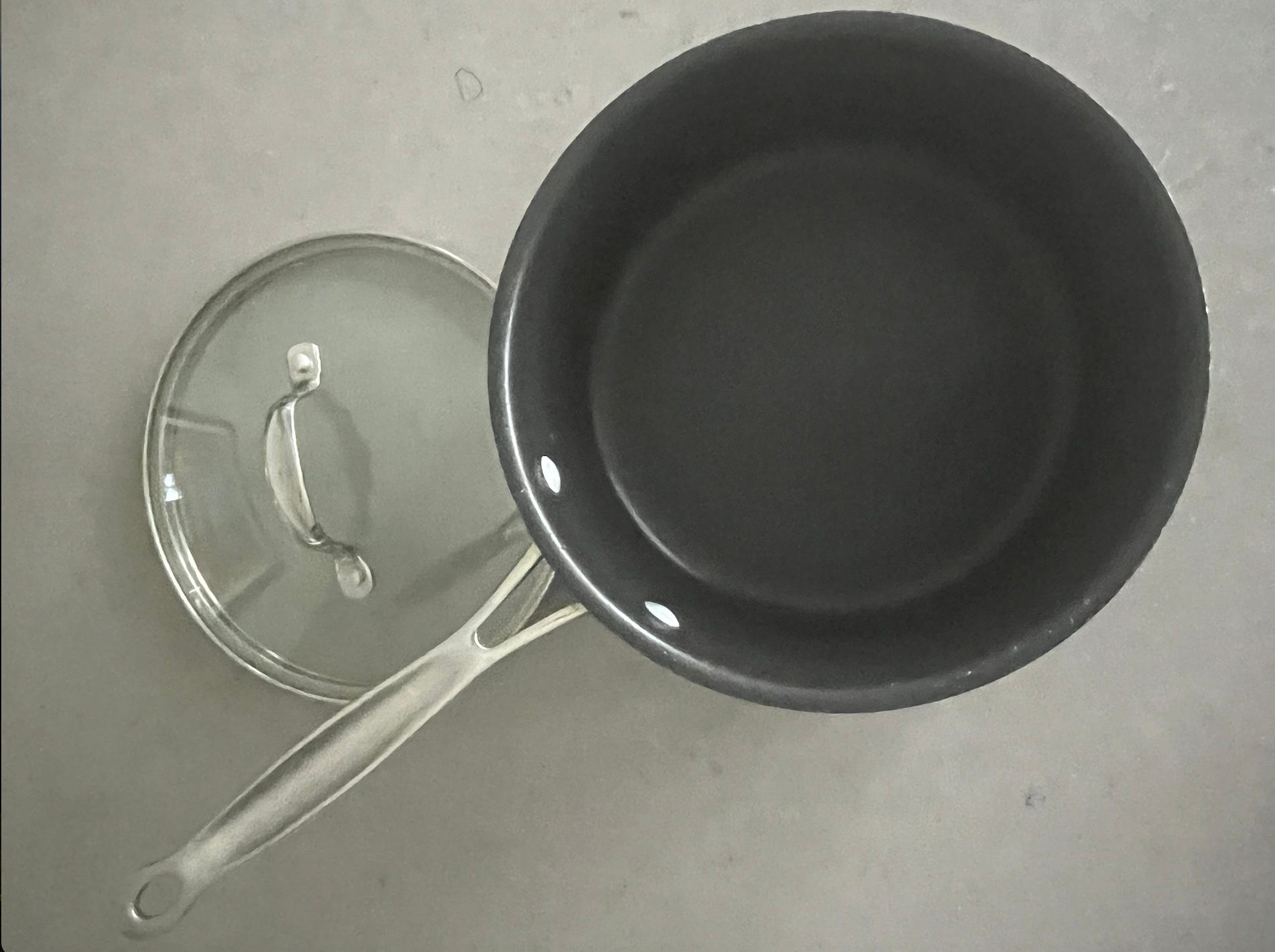
What it is: A workhorse tool, handling countless cooking tasks that don’t require a larger stockpot. I like a medium-sized (3 to 3.5-quart) stainless steel option with a see-through lid. To save even more space, there are some cool versions with lids that have built-in strainers (my son got one of these since he couldn’t find a colander).
Why it makes the cut:
Boils pasta, rice, grains, potatoes, or eggs
Simmer soups, stews, and sauces
Heats or reheats leftovers and pantry staples (like beans or frozen vegetables)
Steams vegetables using a simple basket insert
Handles small-batch cooking (like oatmeal)
Melts butter or chocolate or warms milk
Additional notes: I like a saucepan with a see-through lid, so you can check what’s happening inside without lifting the lid.
Good options: 3-quart stainless steel with lid or 3.5-quart with glass strainer lid (For a slightly nicer/ pricier option, this is a favorite.)
2. Frying pan (skillet)
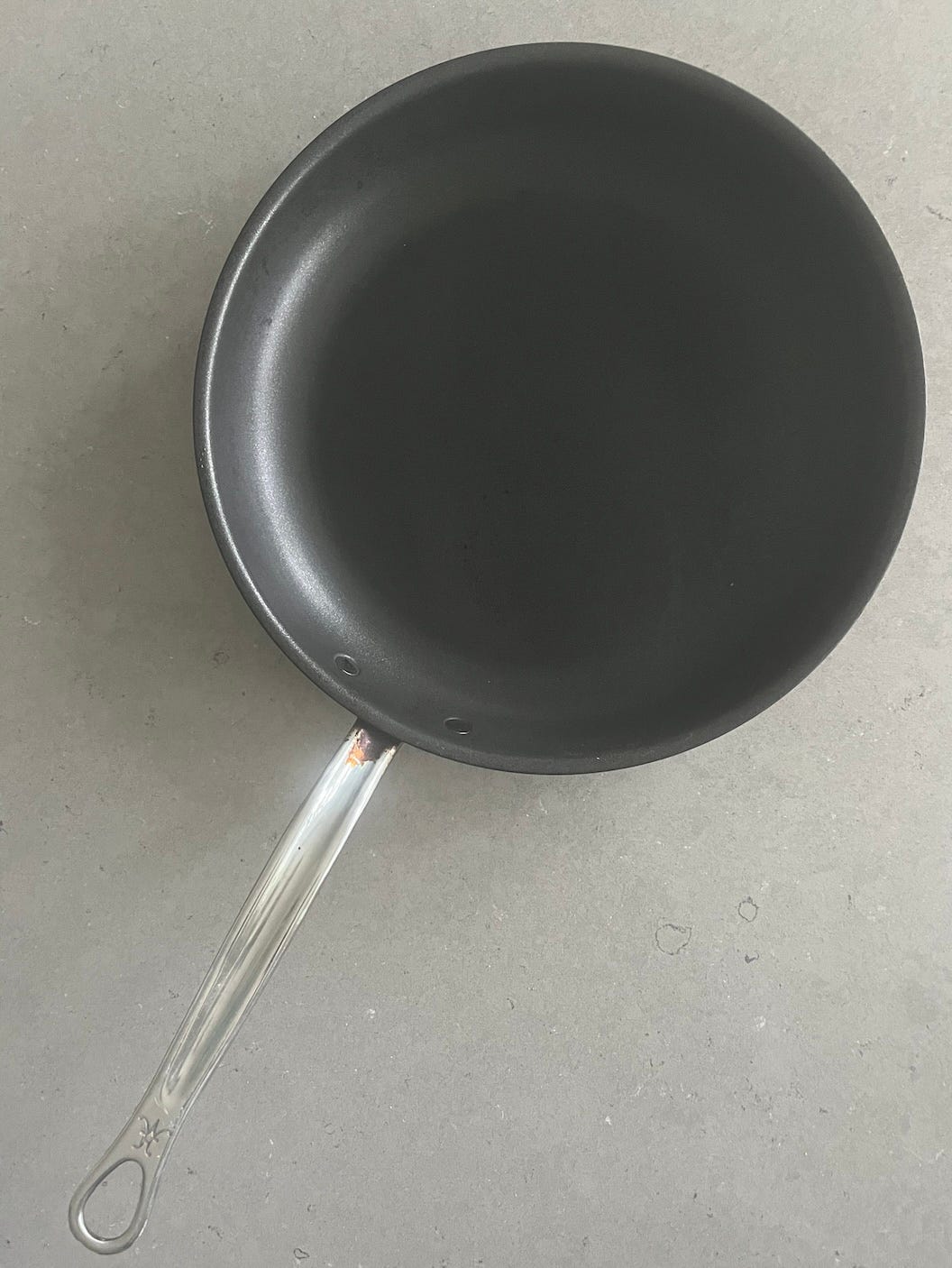
What it is: One of the most-used pans in any kitchen, the frying pan (or skillet) is a pricier item on the list, but also delivers a great ROI.
Why it makes the cut:
Perfect for quick, everyday meals like eggs, stir-fries, or grilled cheese
Sautés vegetables, sears meats, or pan-fries fish, tofu, and chicken cutlets
Doubles as a reheating tool (better than the microwave for pizza or leftovers that need crisping)
Works for one-pan meals when paired with a lid
Easy to clean and store
Additional Notes:
If you’re starting with just one skillet, a medium-sized (10”) nonstick pan is a smart choice. Low-maintenance and easy to clean, it’s ideal for beginners or anyone in a small kitchen or dorm. For a versatile, more forgiving option, try a mid-range ceramic skillet (PTFE- and PFOA-free) or a high-quality PTFE nonstick pan (safe if not overheated). Both are durable and reliable when used properly.
To extend nonstick pan life, avoid metal utensils, don’t preheat an empty pan on high, and hand wash gently.
When you’re ready to upgrade, stainless steel or cast iron pans are more durable, handle higher heat, sear better, and outlast nonstick pans.
Good starter options:
Mid-range ceramic: I own a Green Pan similar to this one that has received positive reviews.
Higher quality nonstick: This is a good, higher-quality nonstick option. Also, while more splurge-worthy, these are my favorite nonstick pans I own—in 8.5-inch and 12.5-inch sizes.
3. Knives
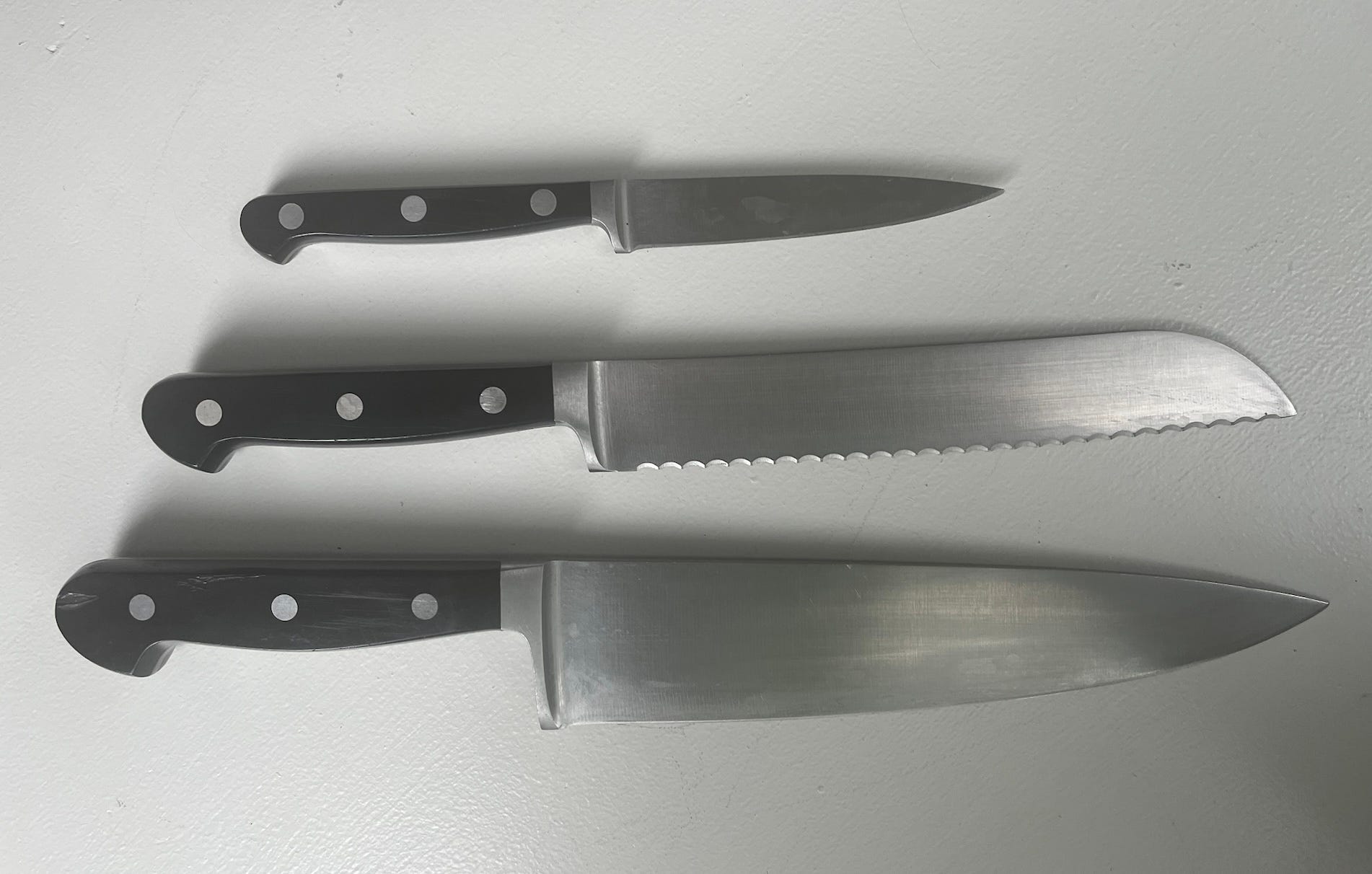
What they are: A good starter knife set should include three essentials: a chef’s knife, a serrated knife, and a paring knife.
Why they make the cut:
Chef’s knife: Handles the majority of chopping, slicing, and dicing tasks. It’s hands-down the most used knife of my set.
Serrated knife: Easily cuts bread, tomatoes, and other soft-on-the-inside/ tough-on-the-outside foods.
Paring knife: Perfect for peeling, trimming, and precision work on small fruits and vegetables.
Additional Notes:
Investing in quality knives ensures easier prep and long-term use.
Take good care of your knives and sharpen them regularly. I discuss this topic in more detail in another post.
Good starter option: Try this three-piece set from Henkels, a reputable brand.
4. Spoonula
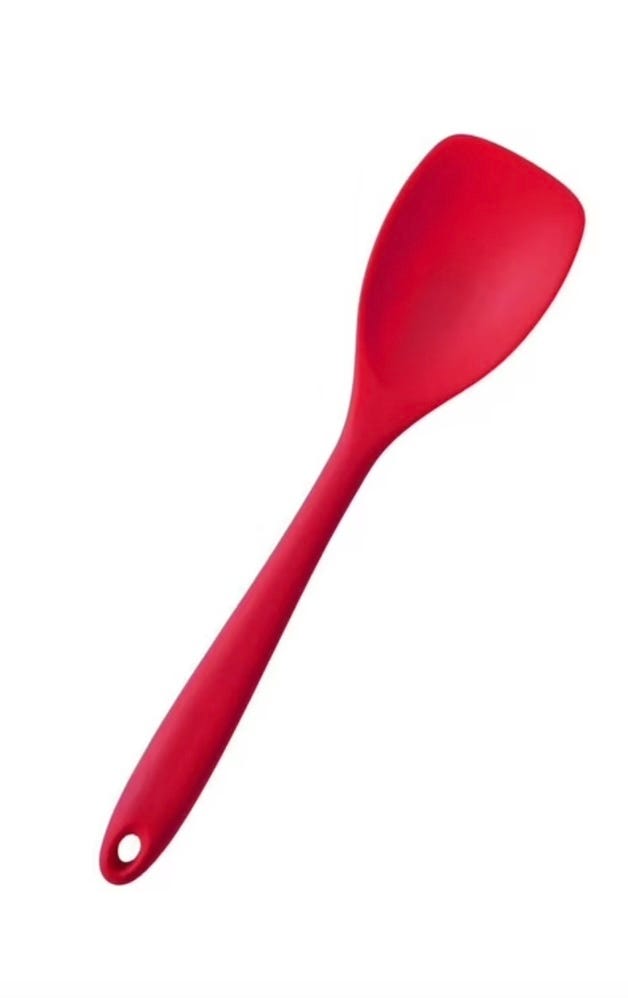
What it is: This hybrid kitchen tool combines the best features of a spoon and a spatula. Its bowl-shaped head—often with a slightly pointed edge or flat side—makes stirting, scraping, scooping, and serving a breeze.
Why it makes the cut:
Two tools in one
Serves so many purposes—stirring sauces, sautéing or stir frying, mixing or folding ingredients into batters or doughs, scraping bowls or pans clean, even scooping and serving foods straight from the pan. The list goes on!
Heat-resistant (usually up to 400–600°F, if made with silicone or wood) to effectively stir hot foods without melting.
Gentle on your cookware and won’t scratch non-stick surfaces.
Additional notes:
Spoonulas are made with a variety of materials such as silicone, wood, or nylon.
As a starter tool, I recommend silicone: it’s heat-safe, nonstick friendly, flexible enough to scrape every last bit out of bowls and pots, and dishwasher safe (unlike wood). The tradeoff is that silicone can feel a little less sturdy when you’re stirring something heavy. For most beginner uses though, it’s a great choice.
Good starter options: A simple one like this or this one that combines the best of both worlds—with silicone and wood—for extra sturdiness.
5. Colander
What it is: A colander is a bowl-shaped kitchen tool with holes in it that’s used for draining liquids from foods.
Why it makes the cut:
Used for straining pasta, washing or rinsing fruits or vegetables (I especially love it for leafy greens), and draining canned beans.
No hands required. Unlike a sieve or slotted spoon, it can sit in your sink, so you can easily pour food and liquid into it.
It’s sturdy and lasts forever.
Additional notes: I recommend a stainless steel option. While not as space-efficient as a collapsible silicone one, stainless steel is sturdier, more durable, heat-resistant, and dishwasher safe.
Good starter options: This is a nice option, as is this one.
6. Vegetable peeler
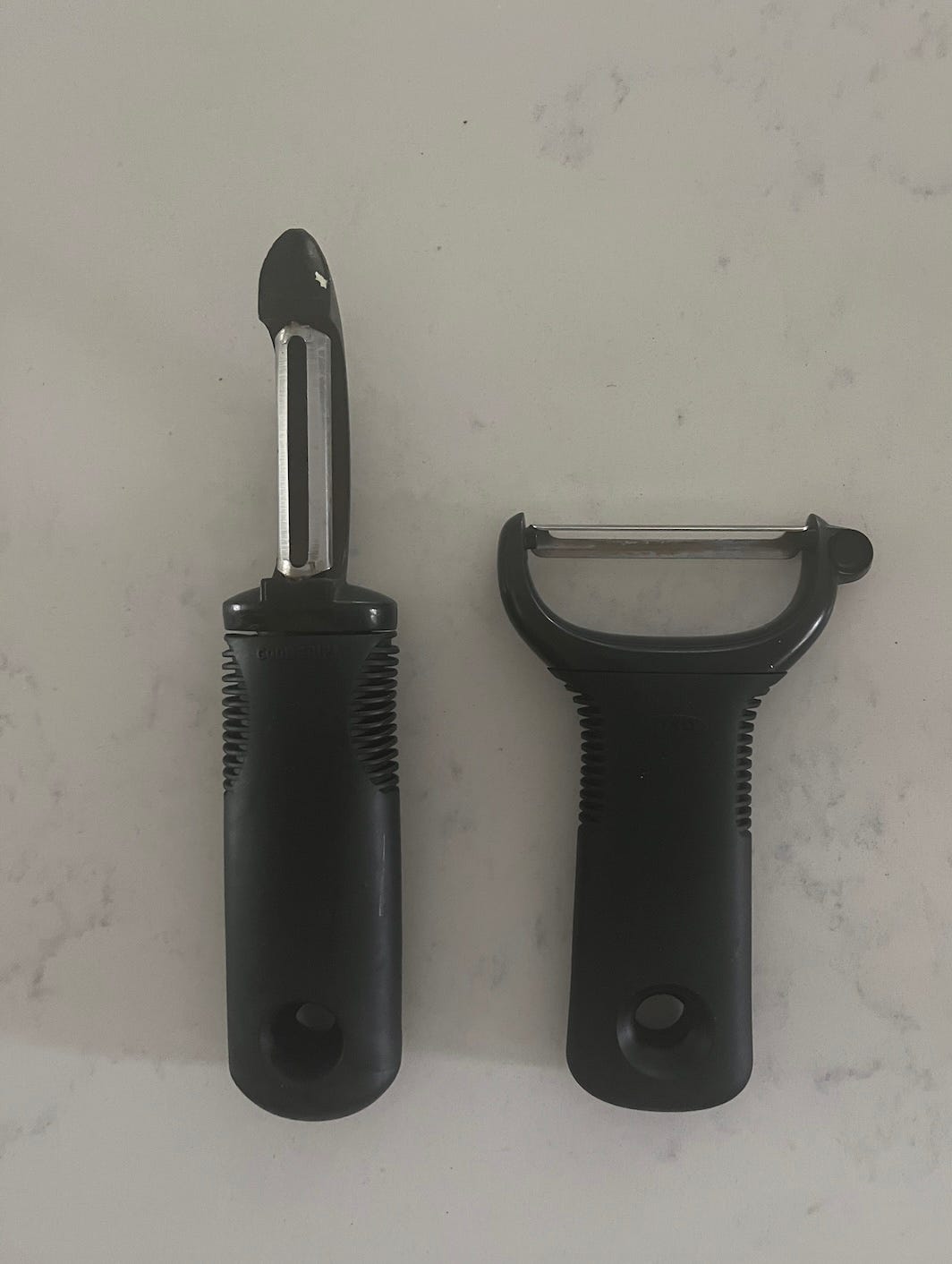
What it is: This small hand tool removes skin or peel from vegetables and fruits easily and more safely than a knife.
Why it makes the cut:
Peels fruits and vegetables (like potatoes, carrots, apples, or cucumbers), but also shaves chocolate or Parmesan, zests citrus fruits, and even makes pretty vegetable ribbons (with carrots, zucchini, cucumbers).
It’s compact, durable, and cheap.
Additional notes: It’s all in the blade orientation. Standard (straight) peelers have blades parallel to the handle, while Y peelers have blades that are perpendicular, forming a Y-shape. I slightly prefer the feel and ease of the Y peeler, but both types are solid.
Good starter options: This is the Y peeler I own and love and here’s the standard one I also have.
7. Can opener
What it is: A handheld tool used to safely open metal cans.
Why it makes the cut:
Opens many shelf-stable, staple foods like beans, tomatoes, soups, coconut milk.
It’s compact, durable, and cheap.
Good starter option: I love this version, especially with all the pretty colors it comes in!
8. Mixing bowl set
What they are: A quality set of mixing bowls in various sizes lets you prep, mix, and serve virtually anything.
Why they make the cut:
Combine batters, doughs, sauces, or salads.
Hold marinating meats, chopped vegetables, or separating ingredients before cooking.
Double as serving dishes for salads, pasta, or popcorn.
They’re easy to clean and store (nesting bowls are particularly space-friendly).
Additional notes: I’d probably start with a set BPA-free plastic bowls, which are less fragile and more durable than glass. However, if you plan to use them in a microwave, then glass bowls are the better choice.
Good starter options: I own a very similar set to these BPA-free plastic nesting bowls. Here’s a good set of microwave-safe glass bowls too.
9. Measuring cups & spoons
What they are: Essential for successful recipe execution, measuring tools ensure accuracy and consistent results in your cooking and baking. Cups handle larger volumes (flour, sugar, liquids), while spoons measure small amounts (spices, extracts, etc.).
Why they make the cut:
Help with precision, especially in baking, where exact amounts are key to success. Also useful in cooking to keep flavors balanced.
Make it easy to portion ingredients without the guesswork; helpful for efficiency and confidence building.
Additional notes: A 2-cup glass measuring cup can also be useful for measuring liquids. And, similar to a small bowl, you can combine or mix ingredients in it.
Good starter option: This measuring cups and spoons starter set is a winner.
10. Sheet pan (baking sheet)
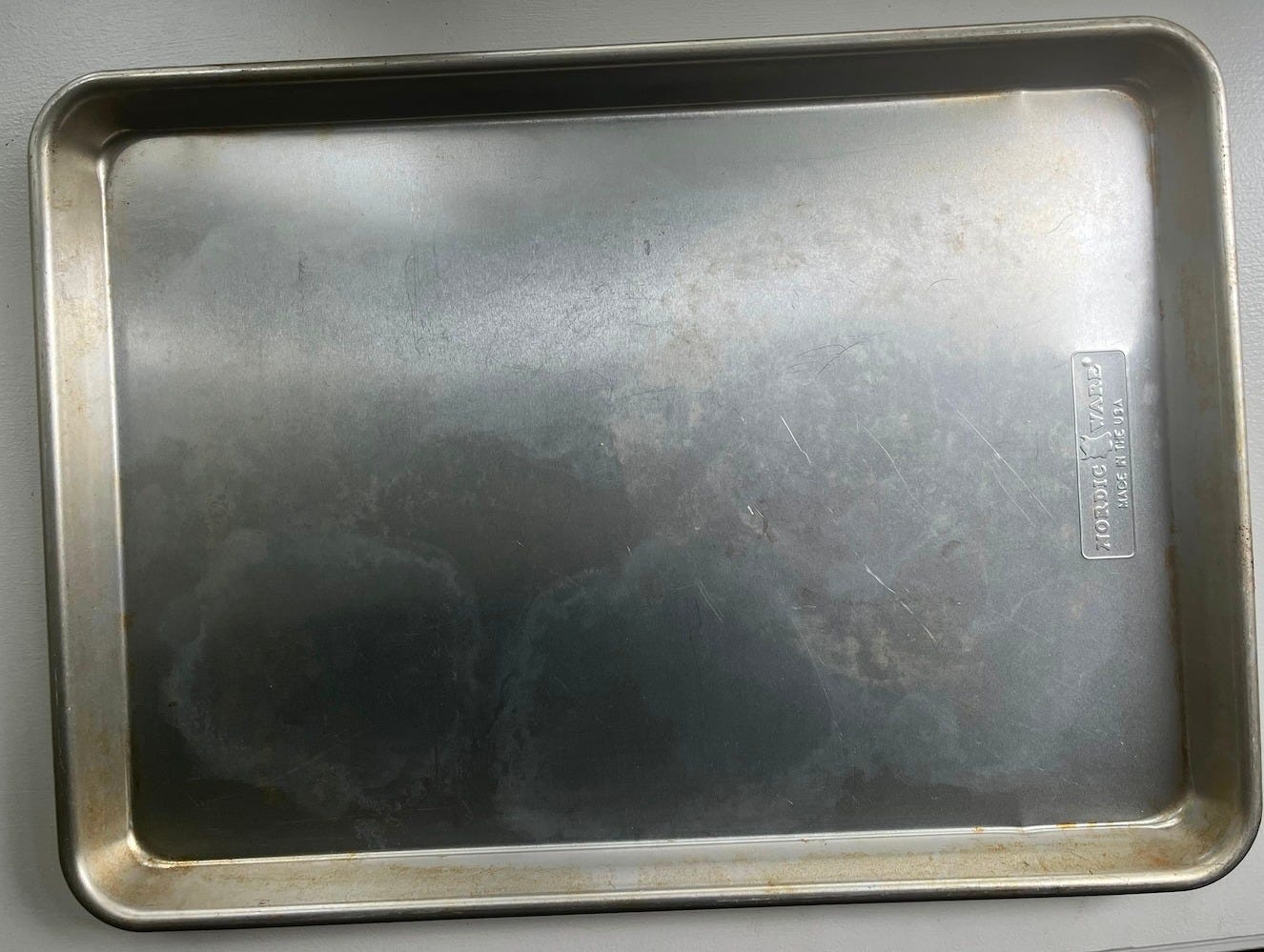
What it is: A sheet pan (or baking sheet) is a flat, rectangular metal pan with shallow sides, designed for baking, roasting, and broiling.
Why it makes the cut:
Used to roast vegetables, fruits, fish, or meat, bake cookies or pizza, make sheet-pan dinners, toast nuts or bread/ buns, crisp bacon, broil foods, and reheat leftovers.
With its low sides, it’s easy to slide food on and off.
Quick cleanup, especially when lined with parchment paper or foil.
Additional notes: A half-sheet pan (about 18” by 13”) with a 1” rim is the ideal starter size. Any higher and it’s harder to slide food off; any lower and juices can spill. Lightweight, uncoated aluminum is the most durable option. Nonstick pans are easier to clean. but tend to scratch and wear over time.
Good starter options: I own three of these aluminum half sheet pans.
11. Cutting board
What it is: A flat surface used for chopping, slicing, and dicing ingredients like vegetables, fruits, meat, and bread. It can be made of wood, plastic, bamboo, or even composite materials.
Why it makes the cut:
Provides a stable, designated area for prepping food.
Allows you to chop or prep anywhere and then easily transfer ingredients to pots, pans, or bowls.
Protects your countertops from knife marks, scratches, and stains.
Additional notes: I’ve used plastic, wood, bamboo and composite cutting boards. Your preference will depend on your space and needs.
Plastic boards can scratch easily, trap bacteria, or release chemicals, so they require extra care—but they’re dishwasher-safe. Wood boards can’t go in the dishwasher and need regular oiling, yet they’re gentler on knives and more durable. Bamboo is another fine option: it’s eco-friendly and resistant to knife marks, but can dull knives faster and also needs occasional oiling.
For a starter kitchen, it’s ideal to have at least two cutting boards—one for produce and one for proteins which is safer (preventing cross-contamination) and also more efficient when prepping multiple things at once.
Good starter options: Bamboo, Composite, and Plastic options.
Some “second-tier” essentials
If you’ve got the space and plan to cook often, I’ve also included a few “second-tier” items I reach for often.
Blender: for smoothies, creamy soups, pestos, frozen cocktails, and more
Box grater: must-have if you love cheese or grated vegetables
Whisk: for vinaigrettes and other emulsions; also use as a sifting hack
Tongs: for tossing salads or pasta, turning foods in pans or on grills, serving, and more
Meat thermometer: can test doneness on baked goods too!
Fine-mesh sieve: for more precise straining and sifting than a colander
Baking dish: for casseroles, brownies, roasting, and more
Large metal spatula: for flipping or lifting heavier foods, or items stuck in pans, on grills, or griddles.
New York Magazine’s The Strategist recently shared their take on essential kitchen tools (clearly a hot/ timely topic!). My list is a bit more minimalist, but I was happy to see significant overlap.
What items be included in your essential starter kitchen toolkit? Share your thoughts by leaving a comment below!
A few good things…
Make these:
Sheet-Pan Gnocchi with Sausage Meatballs & Roasted Shallot Tomato Butter Sauce, Caroline Chambers, What To Cook When You Don’t Feel Like Cooking. I’m a huge sheet pan gnocchi fan due to its versatility and ease, and this is recipe has become a weeknight staple of late.
Susan Spungen’s Triple-Sesame Green Beans (recipe from Veg Forward, shared by Seed + Mill). Blanched green beans tossed in a dressing made with a triple threat: tahini, toasted sesame seeds, and sesame oil.
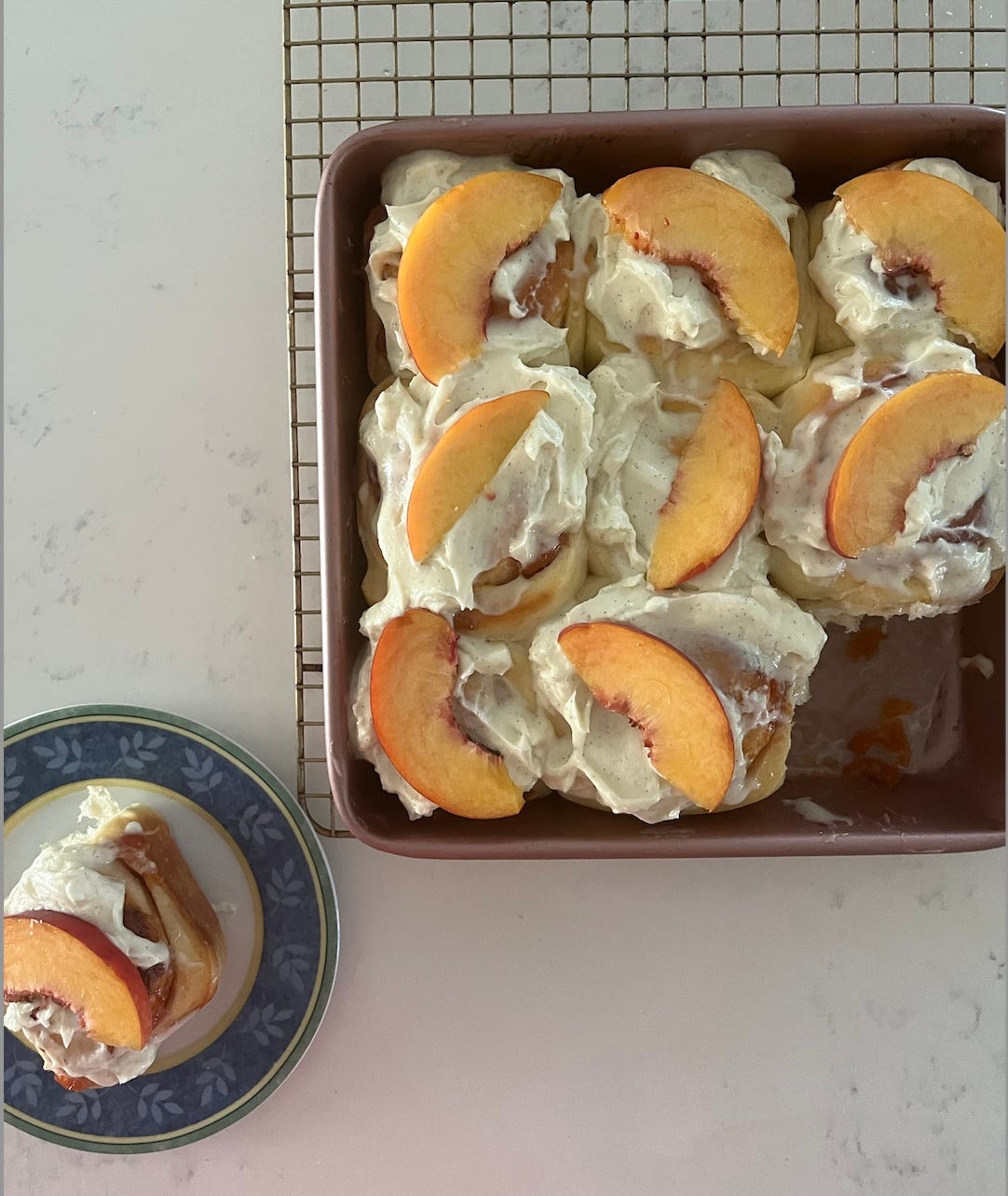
Kristina Cho’s Peaches and Cream Cheese Rolls. My nephew declared these “the second best thing I’ve ever made” (after my peanut butter chocolate cake).
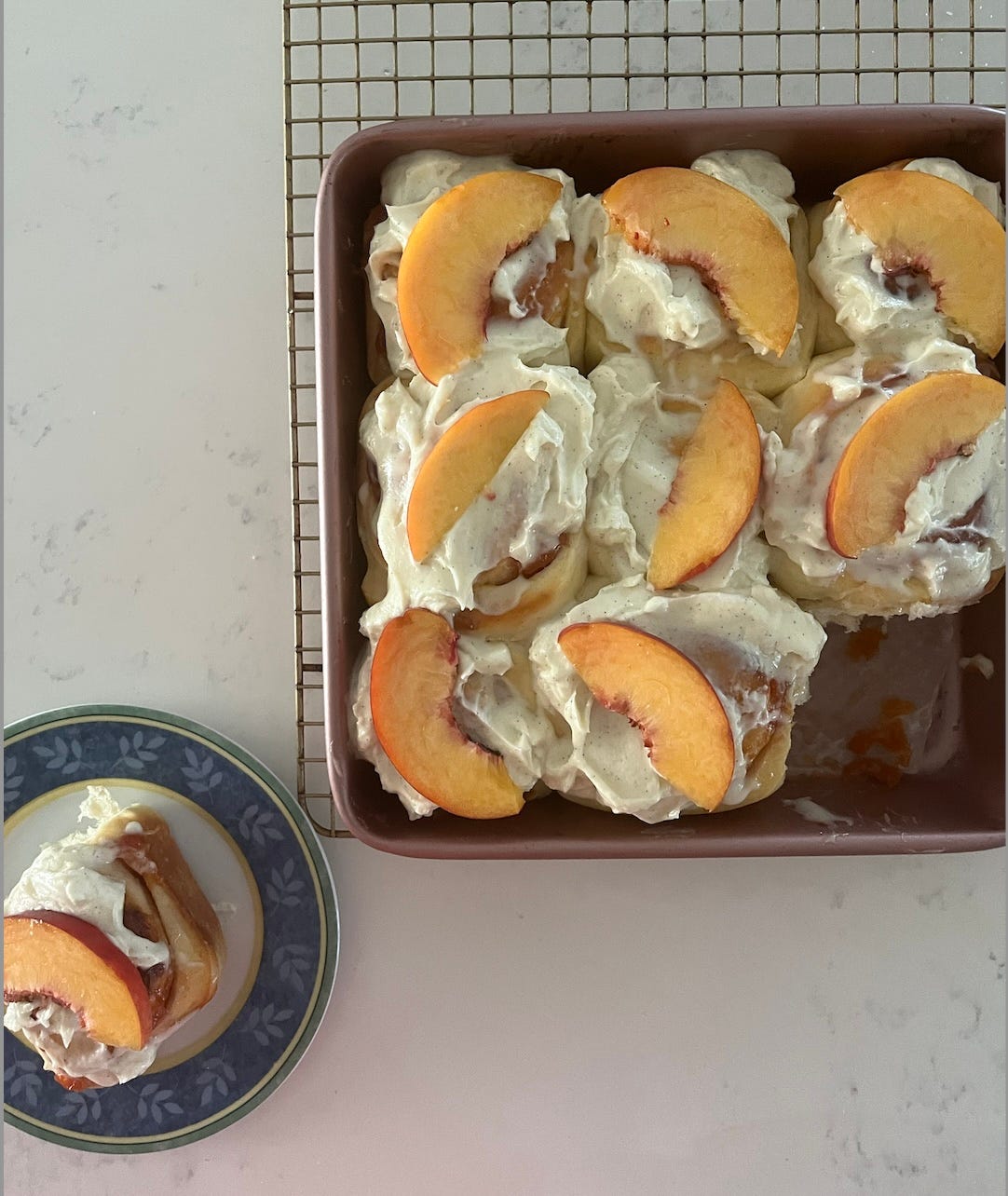
Swoon-worthy peach and cream cheese milk bread rolls.
Try these: Torres Black Truffle Potato Chips. These chips are my new favorite snack food. Best enjoyed with a cocktail. (I’ve never tried them, but they also come in Caviar and Sparkling Wine flavors!)
Read this: Samin Nosrat’s Good Things. I haven’t been this excited for a cookbook release in a loooong time! The Creamy Sesame-Ginger Dressing (the recipe that inspired the book) is one of the best things I’ve ever put on salad—or anything, really—in a while.
I’ve already bookmarked two dozen recipes to make, including: Miso and Labne Onion Dip; Chickpea Salad with Cucumbers and Dill; Roquefort Dressing; Chili Crisp Chicken Salad, Oat and Honey Dinner Rolls; and Yellow Buttermilk Cake.
Watch this: Now that the The Summer I Turned Pretty series has sort of ended (a just-announced movie will keep it going a little longer), I need a new show to watch obsess over. I’ve shifted my focus to The Twisted Tale of Amanda Knox on Hulu and The Girlfriend on Amazon Prime. Enjoying them both so far.
Have a delicious week!
P.S. Some of the links in this post are affiliate links, which means I may earn a small commission if you make a purchase (at no extra cost to you). Not a bad deal, right? 😊
I used to call my grandmother for cooking advice and I know she loved it. I look forward to being on the other end of that call some day 🩷
I like to do the paper cutting test to make sure my knives stay in peak sharp condition